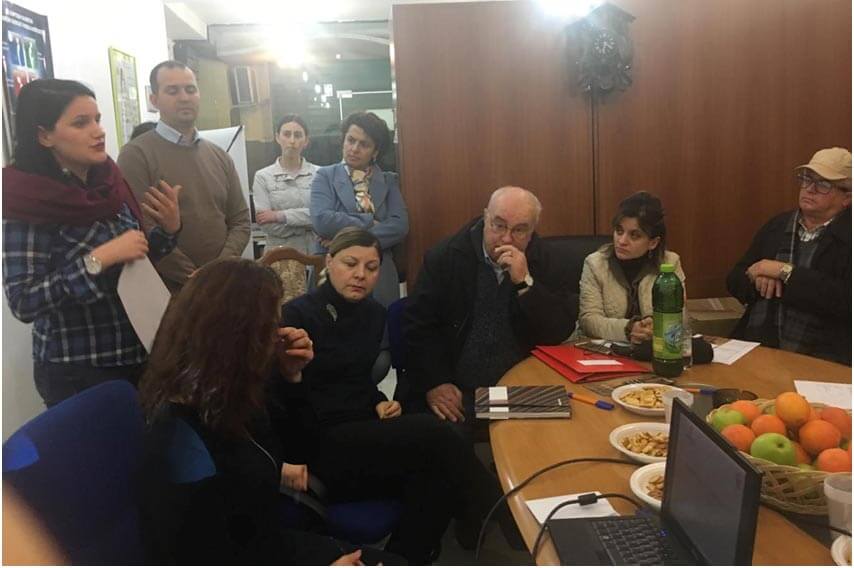
The expensive price of medicines, their safety, the service , hospitalizations, bureaucratic barriers - these were just some of the problems raised by patients during an information session organized by "Together for Life" with patients and representatives of associations of patients.
This information session was organized in the framework of the project "Empowerment of Patients: Fight against corruption in the health system through the empowerment of patients and independent institutions", supported by USAID Albania. The project aims to encourage patients to report cases of corruption in the health system using independent institutions.
The representative of Together for Life NGO, Alma Kordoni presented the project and the purpose of this meeting organized with patients.
“"The project aims to educate, inform and encourage patients and citizens to denounce corruption in the health care system using the mechanism as the media and other independent institutions such as the Ombudsman, the Commissioner for the Protection from Discrimination, The Information and Data Protection Commissioner, Courts, which implement and enforce the law and to protect the rights of patients and citizens ", said Kordoni. u shpreh Kordoni.
Patients were also informed by legal expert Andi Muratej on the legal basis for the protection of patients' rights and the role of independent institutions in the protection of these rights.
Lack of medication, high price and their quality were among the issues that patients highlighted the most .
“"We have the right not to believe in the medicines that the state reimburses us. The pharmacist says: This medicine has been recommended by the doctor, but this other one is better; or pay a little more to get the best medicine ", says a patient with diabetes from Kamza, who has been suffering from this chronic disease since 1995.
"Then I start to doubt myself, if these medicines are expired, they will not work for me. "I start to stress myself, I also get upset with my family members", he adds.
Another patient, who has been suffering from diabetes since the age of 2, also raises the problem of the quality of the medications they receive.
"For some time I was taking medication for another chronic disease caused by diabetes. I was recently introduced to the line of a top quality medicine. "The doctor did not tell me which medicine was of the best quality for fear of being fired," she said.
The referral system and electronic prescriptions were two of the other problems patients posed.
"A patient with diabetes suffers from this disease all his life. While he is obliged to follow a series of procedures every 6 months to take the medication. Is it normal? Why does a chronic patient have to go through a whole cycle, for some documents? "All of these are just bureaucratic barriers," said another patient.
"Every 6 months I do tests. It took me 21 days just to do the heart check. "One day there was no internet, one day there was no doctor", says another patient.
USAID Transparency in the Health System Project aims to improve health services for Albanian citizens by focusing on corruption and fostering cooperation between independent government institutions, NGOs, and the media to seek more accountable governance in the health system. Working with the High Inspectorate of Declaration and Control of Assets and Conflict of Interest Prevention, the Supreme State Audit and the Ombudsman, the project will generate data to measure corruption and related causal factors and will oversee public sector reforms and audits./ Shendeti.com.al