Title of the project: Leadership for everyone
1st training in Tirana, Albania 12-19 September 2022
Host Organization: Together for Life (Albania)
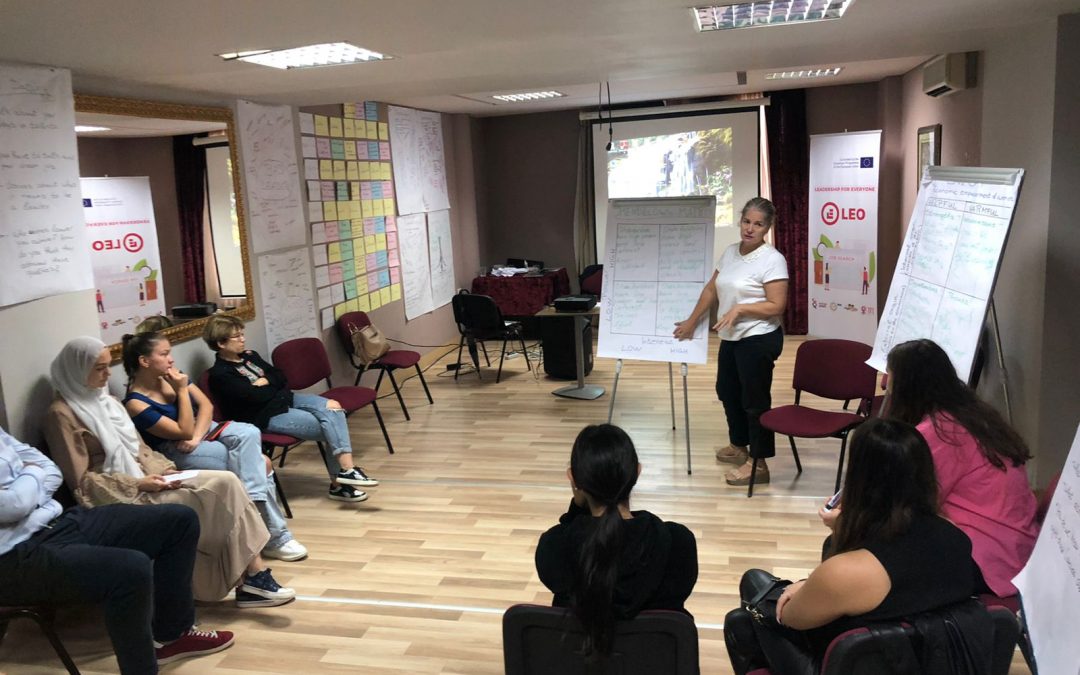
The first training course took place in Tirana, Albania, on 12-19 September 2022, with the participation of 15 youth workers/leaders and young people from Albania, Bosnia-Hercegovina and Italy. The TC aimed to train youth workers (5 per partner country) on how to support young women who struggle to enter the labour market, and how to involve men in their leadership and economic empowerment process.
Together for Life NGO, as the host organization in Albania, was in charge of planning and carrying out the detailed daily programme of the TC (with the objectives, methods, learning outcomes for all sessions) and also on arranging the practicalities and technical support (venue, hotel, local travel, cultural programmes) and support on site. The training targeted youth workers from 4 partner countries: Albania, Bosnia Hercegovina, Italy and Lithuania. The focus of all the partners was to give priority to the youth workers that work with marginalized groups and who can take forward the learning in their organization or community or setting. The TC was based on non-formal principles and a holistic approach, where attitudes and knowledge of participants were developed together with practical skills.
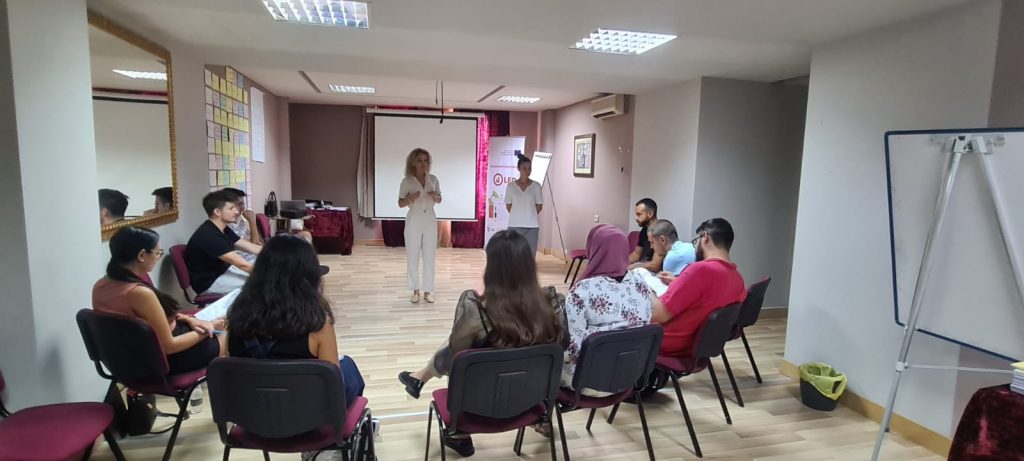
Objectives of the training course:
- To recognize the leadership empowerment for women through involvement of men in support of women leadership.
- To understand the different factors leading to power structures.
- To understand the role of culture in defining gender roles and barriers to employment to support women access to labor market.
- To be prepared to challenge the barriers to women leadership empowerment by involve men in support of women leadership.
- To engage men as supporters for women economic empowerment by involve them to support women economic empowerment.
To maximize the learning and the impact of the training, Together for Life contracted two experienced trainers in the field on non-formal education, gender roles, and economic empowerment. We cooperated with sociologist/researcher Merita Poni (she has a long experience as human rights activist and researcher, and has a PhD in Gender Studies), trainer Marsida Bregasi (a returning expert from Germany). The activity was facilitated by TFL team.
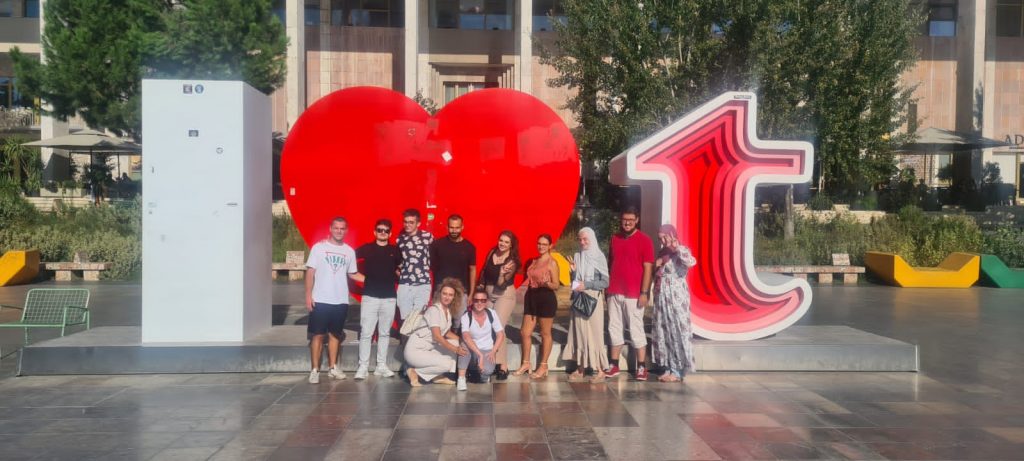
During 6 days of training, we offered the foundations for the group to work together and learn from each other and for each other. The program structure was built up in that way to offer a learning space for participants. The methods were specific to non-formal education and developed creativity and involvement: knowledge and trust exercises; reflection exercises, PP presentations; open space, round table, group workshops, cafe learning; forum theatre, role playing, simulation; watching short videos, etc. To build a group cohesion, we organized different icebreaking activities and simulation exercises, such as “Discover Tirana”, organized in an interesting and constructive way, where participants had the chance to learn both about their fellow group members as well as community.
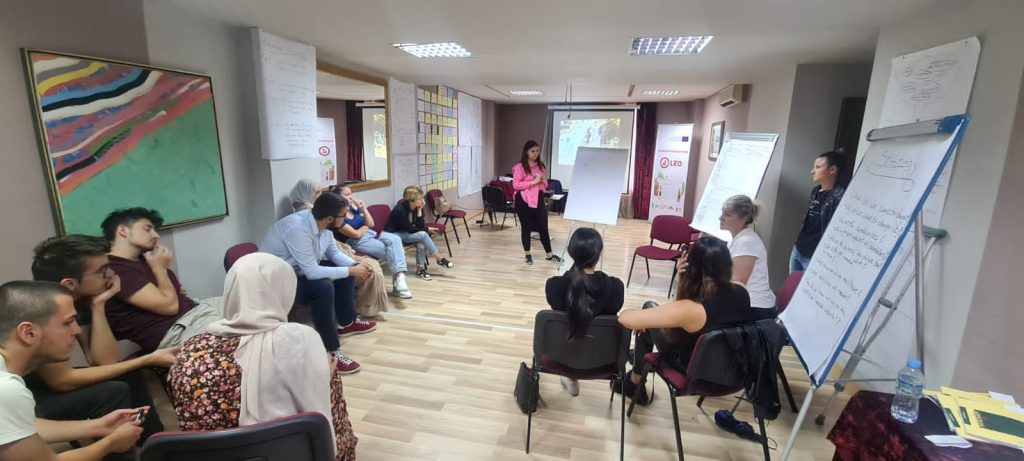
Non-formal methods from Compass Manual, such as “Take a step forward”, “Equal pay for equal job”, “Domestic affairs”, Mendelow”s Matrix were used to discuss with participants/youth workers working with marginalised people about the realities of the people they work with, and to examine a problem/ community issue from different perspectives, from various angles of facts, emotions and creativity.
These methods helped to promote empathy among participants, values of solidarity and responsibility to their community life, and also to understand the role of culture in defining gender roles and barriers to employment. “Good leader/ bad leader” method was used also to help young people to reflect on leadership skills. We also had small-group discussions on differences between leader and manager, plenary discussion on what would women participation in power would count for democracy, how can we change the old behaviour to improve women capacity as leaders, individual recall of personal experience of leadership styles/ leaders of positive and negative examples.
More info about the training course, the methodology, impact had on participant level, target groups and stakeholders, you can find in this link Leadership for everyone_Training course in Albania