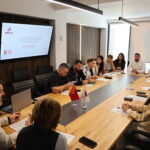
To promote solar system technology, the installation of solar thermal systems for water heating and lighting in the remote village of Thethi was inaugurated, as a sustainable model for poverty alleviation in low-income communities in northern Albania. This initiative was implemented by "Together For Life" with the support of the UNDP Climate Change Program, the Global Environment Facility (GEF / SGP) Small Grants Program in cooperation with the German Office for International Cooperation (GIZ).
At its inauguration was also the UN Resident Coordinator and UNFPA Representative in Albania, Mrs. Zineb Touimi-Benjelloun and representatives of the Ministry of Economy.
During this year the GEF / SGP and the GEF / UNDP Solar Hot Water Panels Project have enabled the installation of solar thermal systems for water heating and the use of other household appliances in 11 inns in Theth.
35 inns and health centers are equipped with photovoltaic systems which provide electricity supply for lighting. These interventions aim to improve the lives of Thethi residents by strengthening the local economy through the creation of sustainable eco-tourism.
Through this activity in Theth, concrete life examples of the "green economy" were promoted that demonstrate in real terms how environmentally friendly approaches can bring economic growth, development, jobs and reduce inequality.
Income received by residents amounted to 200,000 Euros which are estimated at 7-8 times higher than the social assistance scheme.
Theth National Park, one of the largest forest areas in Albania, offers the protection of a wide range of endangered animals such as bears or lynx. Surrounded by the high mountains and stunning necks of the Albanian Alps with streams and crystal clear waters, with fresh and aromatic air from abundant medicinal vegetation, accompanied by the extraordinary hospitality of the inhabitants, Thethi valley is a perfect tourist destination . In addition to the natural beauties, the area lacks electricity as the local power station is not in operation and the village is not connected to the electricity grid. On the other hand, the distance of this area, the great distance from the markets and the lack of a suitable agricultural land have led to very few profitable activities in addition to local tourism.